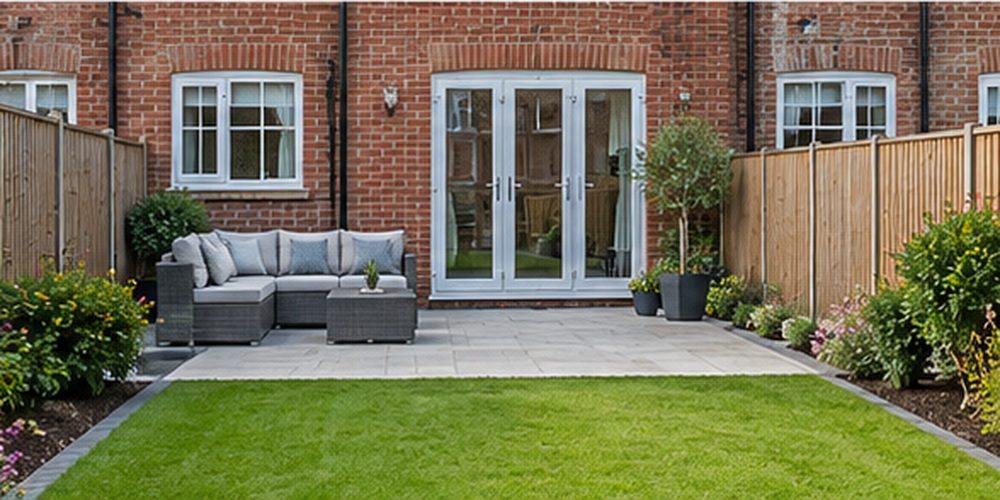
Can You Extend a Patio Without Replacing It? Yes, an existing patio can often stay in place while you add a new section beside it. However, that decision depends on the condition of the original paving, the ground beneath it and whether the enlarged layout can drain properly. A successful patio extension starts with those checks, not simply with finding similar slabs.
Perhaps your garden table fits, but nobody can pull out a chair without stepping onto the grass. Alternatively, you might need a separate seating area, a better route to the lawn or space that works for visiting family. In these situations, enlarging the patio deserves consideration before you commit to replacing everything.
At SJS Multitrade, our landscaping services in Northampton and Northamptonshire include patio extensions and pathway links. This guide explains how to assess the possibilities, combine old and new paving and decide when retaining the original surface makes practical sense.
Can your existing patio stay in place?
Start by separating appearance from performance. A patio that looks tired may still provide a useful starting point. Conversely, attractive slabs can conceal an unsuitable installation. The question is not simply whether you like the colour. It is whether the existing area can become a dependable part of the finished design.
How can you identify problems worth investigating?
Make a note of rocking slabs, uneven edges, recurring puddles and joints that repeatedly open up. Also record whether these problems affect one corner or the whole surface. You are gathering information for an assessment rather than diagnosing the cause yourself. Photographs taken after rain can help explain issues that disappear on a dry day.
Next, think about the patio’s history. Has the same corner dropped more than once? Did problems begin after nearby building work? Has somebody previously added a narrow strip along one edge? Details like these help a contractor decide what needs investigating before recommending an extension.
A visual inspection cannot prove the condition of every hidden layer. Consequently, the quotation may need to allow for a limited investigation or explain what happens if lifting an edge reveals unexpected problems. Ask which parts of the existing installation the contractor has actually assessed and which remain assumptions.
How should a patio extension improve your layout?
Before choosing paving, describe what you need the extra space to achieve. “A bigger patio” is a starting point, but “room for six people to dine while keeping the garden path clear” gives the design a much clearer purpose. It also helps prevent paying for additional paving in the wrong place.
Try setting out your furniture in its intended arrangement. Pull the chairs back as though people were using them, open the back door fully and walk towards the rest of the garden. Include the space occupied by a parasol base, storage box or outdoor sofa rather than measuring only the table.
Then mark a possible extension with string or another temporary guide. Live with that outline for a few days before deciding. For example, a wider section along one side might solve a cramped dining arrangement more effectively than a shallow strip across the entire front.
Keep everyday routes in mind as well. A useful seating area should not force everyone between the table and the kitchen whenever they visit the shed. Our patio installation service provides a starting point for discussing how the paved space should connect with the rest of your garden.
Can you match new paving to old slabs?
Matching is worth exploring when you want the extension to read as one continuous surface. Start with any paperwork from the original installation. Product names, supplier details, photographs of packaging and spare slabs can all help establish what you already have.
Nevertheless, treat “similar” and “matching” as different things. Compare actual samples beside the existing paving rather than relying on a website photograph. Look at the size, thickness, edge profile, texture and overall tone. Check how the samples sit within the original laying pattern, too.
Should you clean the original patio before comparing colours?
It can be useful to assess a suitably cleaned sample area before choosing new paving. Otherwise, you may end up matching years of surface dirt rather than the material underneath. Discuss the cleaning method first, particularly where existing joints or the paving surface need care.
Even then, do not make an invisible join a condition of success. New material and weathered paving may remain visibly different. Ask to see the proposed combination outdoors, in the actual garden, and decide whether you like the result as it is rather than relying on a promise that everything will eventually look identical.
How can contrasting paving make the extension look deliberate?
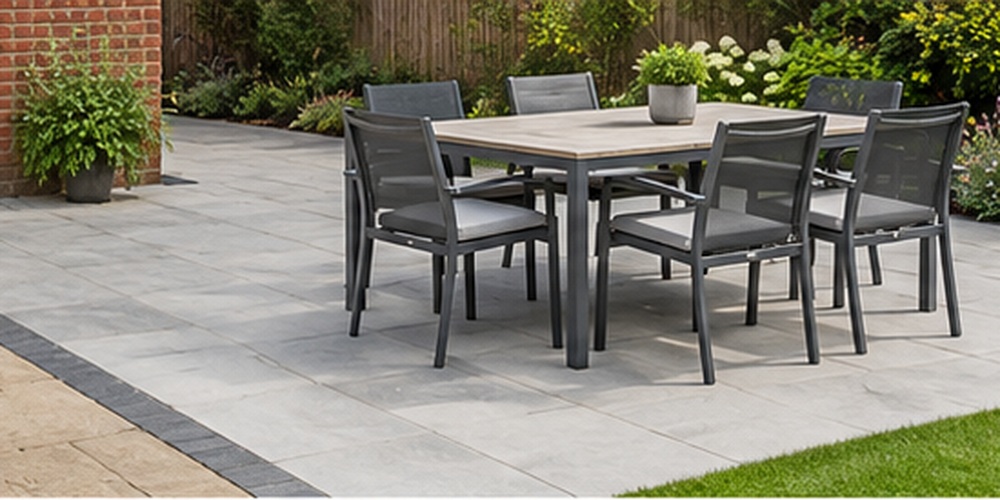
When an exact match proves difficult, a clear change in material can produce a more coherent design than an approximate match. Consider keeping the original patio as a seating area and giving the extension a distinct role, such as outdoor dining. The difference then explains the layout rather than looking accidental.
A contrasting border offers another option. For example, a simple band of darker paving could frame the retained area and continue around the extension. Repeating that detail at the edge of a path can help connect the two surfaces without pretending they came from the same batch.
However, resist introducing too many finishes. An older patio, a new paving colour, decorative gravel, patterned edging and a separate step material can make a small space feel visually busy. Start with the house, the retained paving and one proposed addition. Add further details only where they have a clear purpose.
Also check the transition underfoot. A change in appearance does not have to mean a change in height. Ask the installer to explain how the finished surfaces and joints will meet, especially along the routes people use most often.
Why does a patio extension need its own groundwork?
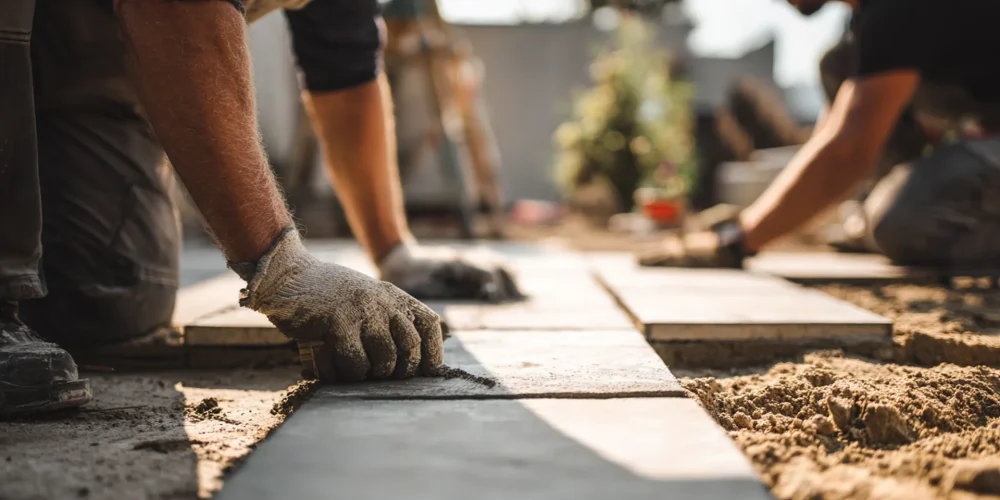
Keeping the original patio does not remove the need to prepare the adjoining area properly. The extension requires a construction build-up suited to the paving, the ground and the intended use. The Marshalls patio installation guide illustrates the importance of preparing the ground and constructing a suitable sub-base before laying slabs.
For your project, ask what preparation the quotation includes and how the contractor will check the ground after excavation. Do not assume a shallow addition can simply sit on whatever material happens to be beneath the lawn. Equally, do not request a universal depth taken from an unrelated garden or online example.
The junction with the existing patio deserves a specific discussion. Will the contractor lift any edge slabs? Does the old edge need attention? How will the new work finish without leaving an awkward strip or unsupported detail? These questions help distinguish a considered extension from a surface-only addition.
It is also sensible to agree how hidden findings will affect the work. For instance, the installer might discover buried concrete where the proposed extension meets a former path. A written variation process allows you to consider the options before additional work goes ahead.
How should drainage and finished levels work together?
An enlarged patio needs a drainage plan for the combined surface, not just the new section. Marshalls’ patio design guidance identifies water run-off and standing water as important design considerations. Adding paving without considering where rainfall will go leaves a significant part of the project unresolved.
Ask the contractor to show you the intended drainage direction and explain the destination for collected water. A visible channel is only one component of a drainage arrangement. You should understand the proposed system rather than assuming that a grate beside the paving answers every question.
Can the extension follow the original patio height?
That needs checking against the whole setting. Door thresholds, existing drains, steps, ventilation openings and damp-proofing details all deserve attention. The Pavingexpert guidance on damp-proof courses discusses the relationship between paving levels, drainage and the building. The original surface is not automatically the right level simply because it is already there.
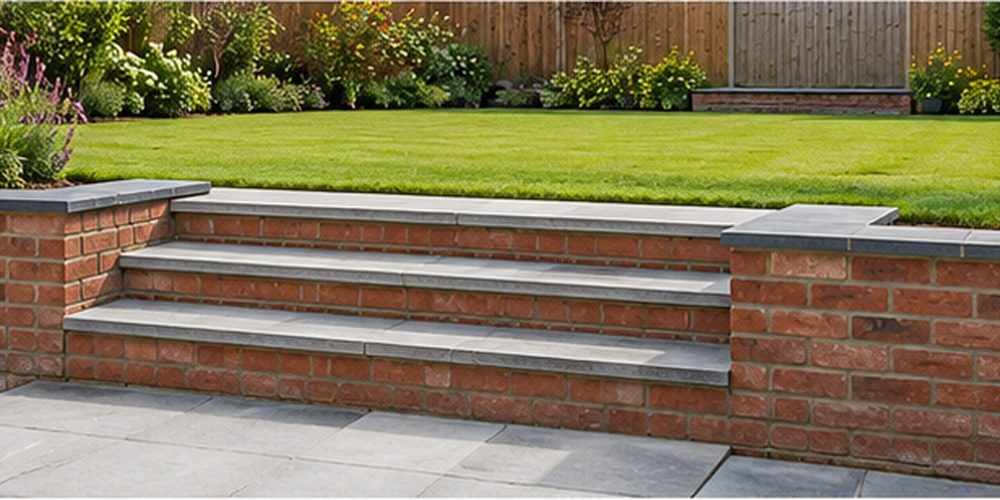
Describe any access requirements before the design is fixed. A household aiming for easier movement between the house and garden needs those requirements considered alongside weather protection and drainage. Treat an accessible threshold as a detail to design properly, not as a reason to raise paving against the building without assessment.
Can you lift and reuse some of the existing slabs?
Keeping the entire patio untouched is not the only way to avoid replacing all the paving. Sometimes a better layout involves lifting selected slabs and reusing them within the enlarged design. This can be worth considering when the material appeals to you but the current arrangement does not.
Discuss reuse before demolition begins. Ask which slabs look suitable, whether lifting could damage them and what allowance the contractor has made for replacements. Existing mortar, previous repairs and the condition of individual units may affect the practical options. Do not build the budget around recovering every slab intact.
Also separate material savings from labour savings. Reusing paving can still involve lifting, cleaning, sorting, storing and relaying it. Therefore, compare the complete proposed work rather than judging the idea only by the number of new slabs required.
For example, you might retain the best slabs in the area nearest the house and use complementary new paving beyond a defined border. Another option is to reuse selected slabs for a connecting path. These are design possibilities to assess, not reasons to retain unsuitable material at any cost.
When should you consider replacing the whole patio?
Full replacement deserves a fair comparison when keeping the old area creates too many compromises. Perhaps the existing shape conflicts with the layout you need, several areas require investigation, or you strongly dislike the original material. In that situation, preserving it may become an objective without a useful benefit.
Ask for clearly described alternatives: retain and extend, repair and extend, or replace and redesign. Each option should address the same intended use. Otherwise, a small extension may appear cheaper simply because it leaves several of your original problems unresolved.
Think about the finished result, too. Would you still want to replace the old section shortly after the extension? Would that later work disturb the new paving? Discussing the likely next step can reveal whether a staged approach is sensible or whether it would duplicate work.
What affects the cost of extending a patio?
The additional area matters, but it is only part of the quotation. Access, excavation, disposal, material choice, cutting, drainage and the amount of work needed at the old edge all influence the scope. A narrow extension with awkward access may involve different tasks from a straightforward rectangular addition.
Instead of relying on a generic price per square metre, ask for a written description of what the contractor proposes. It should identify the paving product, preparation, treatment of the existing patio, drainage work, edging and waste removal. Clarify whether cleaning or repairs to the retained section are included.
How can you compare patio extension quotations fairly?
Give each contractor the same layout and priorities. Then compare the work described, the assumptions and the exclusions, not just the final figure. Ask how each quotation deals with unexpected ground conditions and whether you will approve changes before they proceed.
Agree the boundary between new and retained work as well. A guarantee for the extension does not automatically establish the condition of an older installation. Request clear wording about what the contractor will take responsibility for, particularly when part of the existing patio remains untouched.
Do you need planning permission for a patio extension?
In England, the Planning Portal’s patio guidance explains that hard surfaces at or near ground level elsewhere around a house generally have no restriction on area. However, front gardens follow different rules, and significant embanking or terracing may require an application. Listed buildings and restrictions on permitted development also need checking.
Consequently, avoid treating “it is only a patio” as confirmation that no checks are necessary. Raise the question early when a proposal changes garden levels substantially, affects a listed property or includes additional structures. Your local planning authority can clarify the position for the actual proposal.
How can planting help connect the enlarged patio?
Plan the edges as carefully as the centre. An extension does not have to consume every adjacent border. You might prefer a larger dining area on one side while retaining planting along another, giving the paving a purposeful outline and leaving room for the parts of the garden you already enjoy.
For inspiration, our guide to using raised beds and planters to enhance your patio explores ways to bring planting into paved spaces. Consider the actual size of pots and planters in your layout so they do not immediately occupy the circulation space the extension was meant to create.
Finally, ask for care instructions covering both surfaces. Different paving and jointing products may need different treatment, so keep the product information from the new work. Record the supplier and retain any useful spare units for future repairs rather than losing the details once the installation finishes.
What else should you know before extending a patio?
Can you extend a patio without disturbing any existing slabs?
Possibly, but do not make that a requirement before the installer has assessed the junction. Some edge work may be necessary to achieve the proposed finish. Ask what disturbance the quotation anticipates and how the contractor will explain any additional work that becomes necessary.
Is a patio extension always cheaper than replacement?
No. Compare the total work required for each option. Keeping a suitable patio may avoid unnecessary replacement, but extensive repairs, complicated matching or an awkward layout can change the comparison. Request alternatives that provide the same usable space and address the same existing problems.
Can you add porcelain beside an older stone patio?
It is a design option worth discussing, rather than an automatic problem or an automatic match. Compare samples and ask how the installation will handle the transition between materials. A deliberate border or separate seating zone may suit the combination better than trying to disguise the difference.
How long will the new patio section take?
The contractor should estimate the programme after assessing the area, access and proposed work. Ask separately about the working period and when you can put furniture on the finished surface. The installation and jointing products will influence handover advice, so avoid assuming the patio is ready as soon as laying finishes.
Can you add another section in the future?
Raise that possibility now. It may influence the layout, material choice and position of borders or drainage. Nevertheless, do not assume the same paving will remain available indefinitely. Ask what information and spare material would be useful if you later decide to enlarge the space again.
How can SJS Multitrade help with your patio extension?
A useful patio extension should solve a specific problem while making the old and new areas work together. Start with the existing condition, the space you need and the practical details around levels and drainage. Then compare retaining, adapting and replacing the original paving on that basis.
SJS Multitrade provides patio and landscaping services across Northampton and the wider Northamptonshire area. To discuss your garden, request a free, no-obligation quote or call 01604 657 391. Share photographs of the current patio, its approximate dimensions and what you need the extra space to achieve.