Your driveway plays a significant role in how your property appears and functions. A well-chosen driveway material improves kerb appeal, lasts longer, and can raise property value. With numerous options available on the market, selecting the right driveway material for your property depends on your style, specific needs, and budget.
In this post, we examine the most popular materials in the UK and outline the advantages and disadvantages of each. Whether you want a modern look, low maintenance, or something that fits a heritage setting, there’s a surface to suit.
Understanding Your Needs First
Think About Usage
How many cars will use your driveway? Will you park heavy vehicles? These answers help rule out weak materials. Frequent use demands strength and long-term performance.
Consider the Ground Below
The base needs to be firm. Clay soils may require extra work. Sloped driveways may need added grip. Proper drainage is vital to prevent water pooling or cracks.
Think About the Future
Are you looking for something that needs little upkeep? Do you want to change the layout later? Some materials are easier to adapt or extend than others.
Block Paving
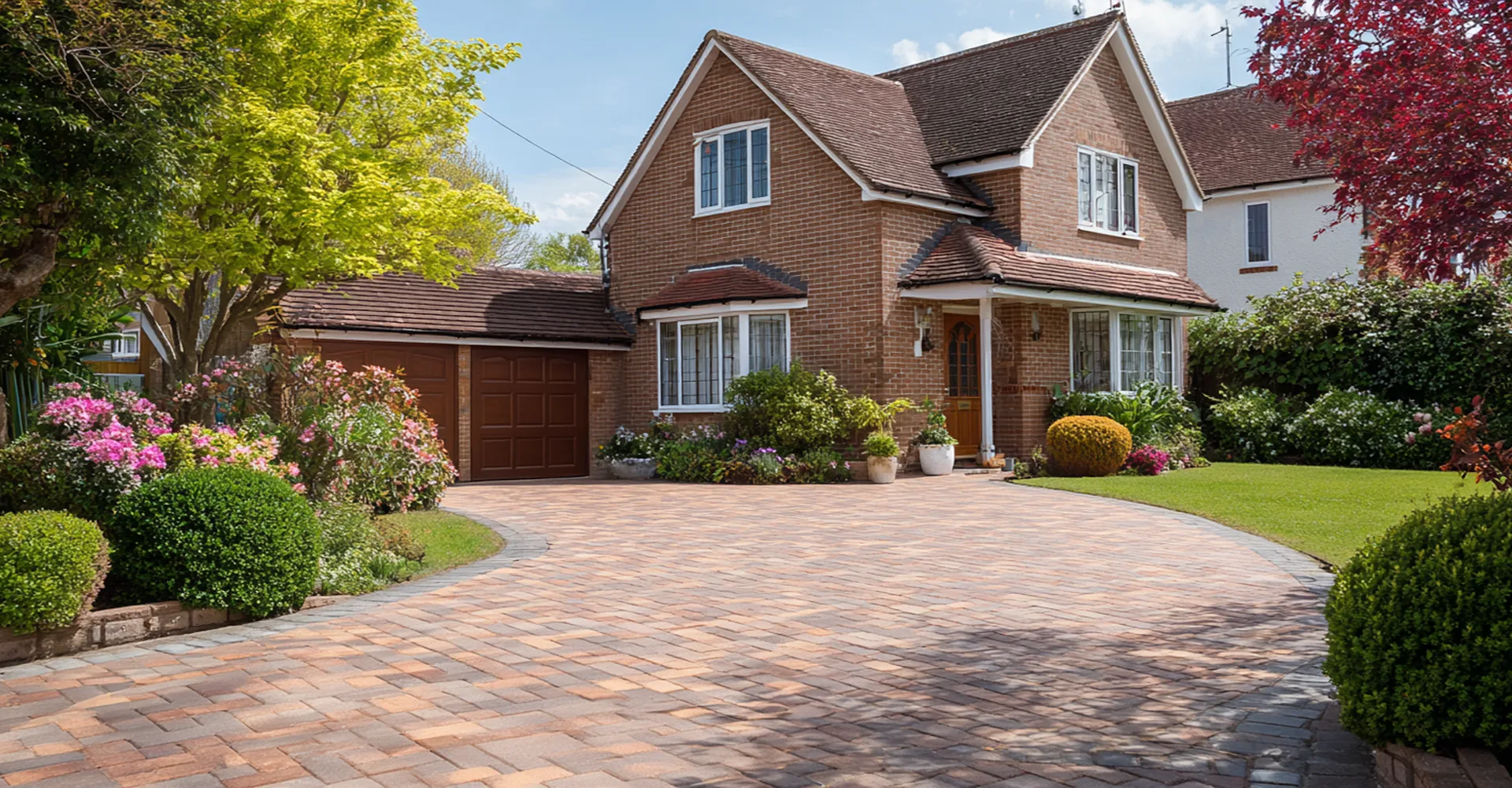
Block paving is a common choice for homes across Northamptonshire and Cambridgeshire. It offers good looks, flexibility, and strength.
Benefits of Block Paving
- Custom Looks: Blocks come in many shapes and colours. You can create patterns to match your home’s style.
- Repairable: Damaged blocks are easily replaceable, eliminating the need for a full drive replacement.
- Durable: When installed properly, it withstands heavy traffic.
Drawbacks of Block Paving
- Weed Growth: Gaps between blocks can attract moss and weeds if not sealed.
- Cost: More costly than gravel or tarmac.
- Installation Time: Installation takes longer than some options.
Tarmac (Asphalt)
Tarmac driveways are known for being cost-effective and long-lasting. They suit both modern and traditional properties.
Benefits of Tarmac
- Quick Installation: Can often be laid in one to two days.
- Strong and Flexible: Good for heavy vehicles.
- Low Cost: Cheaper than many other options.
Drawbacks of Tarmac
- Limited Appearance Options: Mostly black, although coloured versions are available.
- Can Soften in Heat: High summer temperatures can affect it.
- Needs Edging: Without proper borders, edges can break down.
Resin Bound Gravel
Resin-bound systems are gaining popularity in areas such as Thrapston and Kettering. These mixes offer a smooth, modern look.
Benefits of Resin Bound Driveways
- Permeable: Water drains through, which helps prevent puddles.
- Low Maintenance: No loose stones, minimal weed growth.
- Stylish: A wide range of natural colours available.
Drawbacks of Resin Bound Gravel
- Upfront Cost: Higher than tarmac or gravel.
- Needs Professional Installation: DIY not recommended.
- Surface Must Be Sound: Not suited to damaged or soft bases.
Loose Gravel
Loose gravel is simple, rustic, and budget-friendly. It’s ideal for country homes and large drives.
Benefits of Gravel
- Affordable: One of the cheapest driveway options.
- Fast Installation: Can be laid quickly.
- Good Drainage: No puddles or waterlogging.
Drawbacks of Gravel
- Not Stable: Stones can move and create ruts.
- High Maintenance: Needs topping up and regular raking.
- Not Ideal for Slopes: Gravel can shift on steep ground.
Concrete
Concrete driveways are strong, long-lasting, and offer a clean, modern finish. Ideal for high-use areas.
Benefits of Concrete
- Tough: Handles heavy loads without sinking.
- Longevity: Can last over 30 years with proper care.
- Custom Finish: Available in smooth, brushed, or patterned styles.
Drawbacks of Concrete
- Prone to Cracks: Needs control joints to avoid cracking.
- Hard to Repair: Repairs are visible unless the surface is resurfaced.
- Cold Look: Some find it too harsh for home settings.
Choosing the Right Driveway Material Is About Balance
There’s no perfect surface. Choosing the right driveway material involves striking a balance between cost, appearance, and functionality. You must also consider long-term use, local weather conditions, and the level of care you’re willing to provide.
Maintenance Matters
Every driveway surface needs some care. Here’s a quick look at what’s involved:
Cleaning
- Block paving: Needs regular brushing and pressure washing.
- Gravel: Requires raking and weed control.
- Tarmac and resin: May need annual cleaning and sealing.
Repairs
- Block paving: Easy to lift and replace blocks.
- Concrete: Harder to fix neatly.
- Gravel: Simple to top up.
Longevity
- Resin and concrete can last over 20 years if properly installed.
- Tarmac and block paving can match that with care.
- Gravel needs more upkeep to stay neat.
Environmental Impact
Sustainable surfaces are gaining popularity, particularly in areas such as Huntingdon and Rushden, where garden flooding is a concern.
Consider These Green Options
- Resin Bound: Permeable and SUDS compliant.
- Gravel: Allows water to soak through.
- Block Paving (Permeable): Blocks are spaced to allow for drainage.
Sealed concrete and tarmac driveways may cause run-off unless designed with drainage in mind.
Planning and Permission in the UK
Most driveways don’t require planning consent if the surface allows for adequate drainage. However:
- If using non-permeable materials over 5 square meters, you may need planning permission.
- Listed buildings or properties in conservation areas may be subject to additional restrictions.
Always check local guidance for your area in Northamptonshire or Cambridgeshire before work begins.
Installation Advice
A poor base will ruin any good material. Here’s what you must look for in a proper installation:
Base Preparation
- Excavation: Remove soil to a suitable depth.
- Compaction: Lay and compact a solid sub-base.
- Drainage: Set up channels or soakaways if needed.
Edge Restraints
Blocks, bricks, or concrete edges help keep the shape and stop spreading.
Professional Help
Choosing the right driveway material is essential, but correct fitting is key. Use a trusted company like SJS Multitrade for a result that lasts. We serve Thrapston, Kettering, Rushden, Oundle, and the broader areas of Northamptonshire and Cambridgeshire.
Which Driveway Material Is Right for Your Property?
Each surface has benefits. Choosing the right driveway material for your property means asking:
- How will I use it?
- What style suits my home?
- What can I afford?
- How much care am I willing to give?
If you need help deciding, SJS Multitrade offers expert advice and complete installation services. Our team will assess your space, listen to your needs, and help you make the right call.